I’m Just Here for the Candy Halloween Review
First Impressions and Booth Appeal
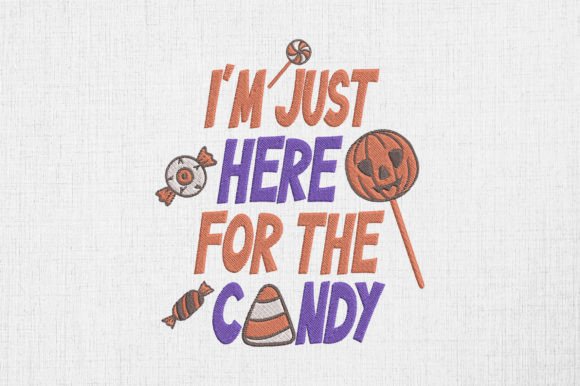
The moment I opened the embroidery file for I m Just Here for the Candy Halloween, I knew this design would stop shoppers in their tracks at a craft fair. It has a lighthearted, slightly cheeky energy that feels perfect for a busy handmade product table. The phrase alone triggers an instant reaction — a smile, a chuckle, or a knowing nod from anyone who loves Halloween but really shows up for the treats. It’s not spooky, not overly childish, and not trying too hard to be elegant. Instead, it sits in a sweet spot that works for funny, casual, and wearable embroidered goods.
For a booth setting, this design acts as a conversation starter. Picture it stitched onto a large tote bag hanging at the front of your display. Customers will read it, laugh, and then start browsing. That emotional hook is pure gold in a craft fair environment where you have seconds to capture attention. The lettering style, while I’ll need to examine it closely once stitched, likely leans bold and readable — exactly what you want for quick-glance selling. If the typography includes any candy motifs or playful dots, even better. A design that combines a witty phrase with small illustrative elements tends to outperform text-only versions on tote bag design surfaces and kitchen textiles.
Best Products for This Design
After testing similar humorous phrases in past market seasons, I have a clear idea where I m Just Here for the Candy Halloween will shine. The design practically sells itself on apron embroidery, especially half aprons or hostess aprons used for Halloween parties. The phrase invites conversation while someone is scooping candy or baking treats. It also elevates a simple tea towel embroidery — think flour sack towels in black or orange, or even a natural linen with contrasting thread. A set of two tea towels with this design, folded and tied with baker’s twine, becomes an easy add-on gift that people grab without hesitation.
Tote bag design is another obvious winner. A sturdy canvas tote stitched with I m Just Here for the Candy Halloween in a prominent spot becomes a year-after-year trick-or-treat bag, a library tote, or a market bag. Parents will buy it for their kids, and adults will buy it for themselves. Small fabric pouches and zipper bags are also surprisingly strong sellers. Stitch the design slightly smaller on the front of a cosmetic pouch or a pencil case, and you tap into the impulse-buy crowd at craft fairs. These items sit nicely in a basket near the cash register, where the text catches the eye and prompts a last-minute pickup.
For makers who focus on wearables, this design adapts well to caps and patches. An embroidered patch version can be stitched onto a pre-made twill base, then heat-sealed or sewn onto jackets, backpacks, or hoodies. Patches move fast at Halloween markets because they’re affordable and collectible. On a curved cap surface, however, you must be cautious with placement. A design that relies on a long straight line of text might arc awkwardly across the front panel. Testing with a cap hoop and flattening the area carefully is non-negotiable before committing to production. I’d reserve caps for simpler, centered layouts and consider a patch as a safer alternative for curved surfaces.
Stitch Quality and Fabric Considerations
When I work with any new machine embroidery design, my first test always involves scrap fabric in multiple weights. Designs with clear, medium-sized lettering like this one generally stitch well on a wide range of materials, but I still pay close attention to stitch density and small lettering. If the phrase contains any tiny text — words like “the” or “for” in a secondary font size — I immediately check whether the stitches fill cleanly on textured towels or napped fabric. Thread tension matters here. A dense fill area surrounded by satin borders can pull tight if the stabilizer isn’t sturdy enough, leading to puckering on lightweight cotton or poly-blend fabrics.
Tea towel embroidery demands a sharp needle and a medium-weight cutaway stabilizer to prevent the stitches from sinking into the weave. I also prefer to use a water-soluble topper on terry cloth or waffle weaves so the top surface stays crisp. The same rule applies to fluffy blankets or plush pillow covers. For apron embroidery, a tear-away stabilizer usually works, but I add a layer of fusible mesh if the apron fabric is thin. The last thing you want at a craft fair is a customer picking up an apron and noticing thread loops or puckered areas around the lettering.
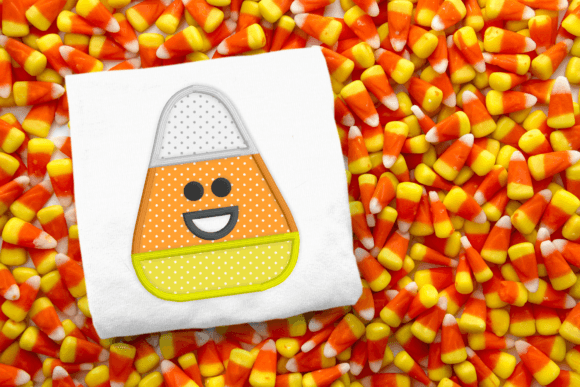
One more nuance: designs that include filled candy graphics or thick outlines may have dense stitch areas that challenge some home embroidery machines. I always slow my machine speed for lettering-heavy files and use a fresh needle to get crisp corners. If the I m Just Here for the Candy Halloween design includes any intricate tiny details, like candy corn kernels or lollipop swirls, those areas need extra scrutiny. A test stitch-out at the exact size you plan to sell is mandatory. Don’t assume it works just because it looks good on screen.
Photographing for Online Listings
As an Etsy seller or small shop owner, your product photos determine whether this design moves from your display to a customer’s home. I m Just Here for the Candy Halloween photographs beautifully on flat-lay surfaces with a few real candy props beside it. I like to style a tote bag design with scattered candy corn, a mini pumpkin, and warm directional light. The contrast between the thread color and the fabric background is what makes the text leap out of a thumbnail image. Always test multiple fabric colors: black fabric with white or bright orange thread creates a bold statement, while a natural linen with deep plum thread feels more farmhouse and cozy.
For printable mockup purposes, you can also create digital previews using the embroidery file imported into embroidery software, then screenshot a realistic stitch simulation. Many buyers want assurance that the lettering is legible before they purchase. A crisp mockup of a tea towel embroidery or an embroidered patch on a jean jacket gives confidence. If you’re selling the digital embroidery file itself, clear mockups on a few different products help customers visualize the end use, which can increase conversion in your Etsy shop or craft supply store.
Scaling and Placement Options
One of the most valuable traits a commercial embroidery design can have is scalability. A phrase like I’m Just Here for the Candy — assuming a clean, uncluttered layout — can work as a large focal design center on a pillow cover or as a small accent on a pocket corner. If the file comes in multiple sizes, you have instant flexibility. I would test the design at roughly 4 inches wide for patches, 5 to 6 inches for tote bags and aprons, and 3 inches or smaller for wristlets or key fob tabs. At very small sizes, watch for small lettering that may lose clarity, especially if the fabric is dark and the thread is light. Sometimes a slight outline around the letters can rescue tiny text, but you can’t always modify a purchased file, so test first.
For large placements on pillow covers or throw blankets, make sure the hoop size you own accommodates the design comfortably. Forcing a design into a hoop that’s too small leads to misalignment and re-hooping headaches. If the file includes split pieces for a multi-position hoop, follow the order exactly and use registration marks if provided. That attention to detail separates a polished finished product from something that looks homemade in an unflattering way.
Designer’s Production Checklist
Before you mass-produce any item featuring I m Just Here for the Candy Halloween, run through this quick mental checklist I use for every new design headed to a craft fair:
- Test on scrap fabric first — ideally the same fabric type you’ll sell. Check for tension issues, missed stitches, or thread breaks.
- Check thread colors against multiple fabric backgrounds. A navy thread on black fabric disappears; a pale yellow on white fabric lacks contrast.
- Inspect stitch density closely. Dense areas should not feel bulletproof or cause the fabric to ripple. Reduce density in your software if possible, or use a softer stabilizer.
- Confirm hoop size compatibility. If the design is too close to the hoop edge, you risk needle strikes on the hoop or flagging.
- Use the right stabilizer — cutaway for knits, tear-away for wovens, and topper for textured towels or fleece.
- Try at least one portable item — a patch, a small pouch — to see how the design holds up under handling and frequent use.
- Create a real product mockup and photograph it. Do not rely solely on digital simulation images for marketing.
- Review commercial licensing terms. The description mentions multiple embroidery file formats, but double-check that the license allows you to sell finished physical products at craft fairs and online.
Display and Customer Engagement at the Booth
At a live event, I m Just Here for the Candy Halloween works as a visual magnet when grouped with similar playful Halloween items. I’d pair it with candy-themed designs, ghost sayings, or other sassy quotes. Place a stitched tote bag on a hook at eye level, and shoppers will reach for it first. Keep a few folded tea towel embroidery pieces on the table edge so people can feel the texture and read the phrase up close. The tactile experience of embroidery — the raised thread, the smooth satin stitches — often seals the deal. The more they touch, the more they connect.
Price points shift based on product. A medium-sized patch can be a $6–$8 impulse buy. A tea towel might land around $12–$18 depending on your local market. An apron with this design could easily command $25 and up if the stitching is flawless. For makers selling the digital embroidery file, the same emotional hook works in a product listing when the phrase resonates with a buyer’s sense of humor. People buy files based on how much they want to stitch something for themselves or as a gift, and this design immediately communicates that “I’m only here for the good stuff” attitude.
Cautionary Notes for Tricky Surfaces
No design is perfect for every substrate. On dark fabric, especially when using light thread, any small gaps in the fill can show through. I often run two layers of topping or use a denser underlay for white thread on black canvas. On textured towels, avoid the temptation to shrink the design too much; loops can obscure fine details. On curved cap surfaces, lettering that spans a wide horizontal area may distort. I’d test the design on a structured cap using a cap driver hoop and consider a slight clockwise rotation so the text sits better on the wearer’s head. If it doesn’t look right after two test runs, I simply focus on flat-goods and skip caps for this particular design. Knowing when to say “not on that product” is just as important as finding a winner.
Final Verdict for Craft Fair Sellers
From the perspective of a working embroidery designer, I m Just Here for the Candy Halloween is a high-potential conversational design that moves product when placed on the right items. It thrives on tote bags, aprons, tea towels, and patches — all staple craft fair product categories. Its humor is broad enough to appeal across ages, and it fits Halloween booths without requiring spooky imagery that might turn away the squeamish. The key to success lies in testing stitch quality thoroughly, choosing fabric and thread combos that pop, and presenting the finished pieces in ways that invite laughter and touch.
For boutique makers, handmade product lines centered around this design can easily expand into matching sets. Imagine a tote bag, a zipper pouch, and a coordinating tea towel, all tied together with orange ribbon. That curation increases the perceived value at your booth and encourages multiple-purchase discounts. For Etsy seller shops and small shop product lines, this embroidery file checks all the boxes: it’s easy to understand, quick to stitch once dialed in, and endlessly photogenic. Treat it as a seasonal staple, and you’ll look forward to Halloween market prep every year. Just make sure your candy bowl is as ready as your embroidery machine.