The Japanese Snowflake Embroidery Design: A Designer’s Review
When you are building a craft fair table display, every design you stitch carries weight. Some motifs pull the customer’s eye across the booth. Others get lost among texture and thread. The Japanese Snowflake embroidery design falls squarely into the first category, but with a quiet confidence that works beautifully for handmade sellers who favor elegance over noise.
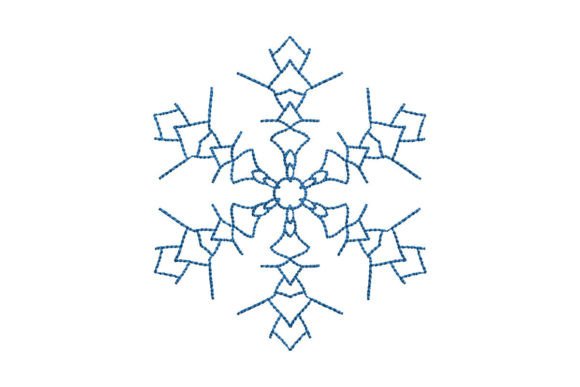
From the moment I opened the preview of this winter embroidery design, I understood its language. It isn’t loud. It doesn’t shout holiday the way a cartoon reindeer does. Instead, it breathes — a nod to the old Japanese winter, to snow gathering on curved roof tiles, to branches thinned by cold air. The description says it best: reminiscent of Japanese winter, houses, and nature. And yes, I can see that immediately. There is an architectural rhythm here, a balance between delicate points and open spaces that feels purposeful and calm. For a craft fair product, that emotional softness matters more than you might think.
The First Impression On The Screen And In Your Hand
Before I even loaded the embroidery file, I spent a few minutes studying the flow. The snowflake motif uses negative space brilliantly. It has enough fine detail to feel sophisticated, but not so much density that it becomes heavy or puckers the fabric. For an Etsy seller or small shop owner, that balance is gold. You need a design that looks complex and valuable to the buyer, yet stitches out reliably without constant thread breaks or tension issues.
The mood leans minimal, modern, and softly festive. I wouldn’t call it rustic. I wouldn’t call it cute. There is a premium feeling here, almost like a woodblock print translated into machine embroidery design form. If your brand aesthetic centers on clean lines, natural materials, and understated beauty, this design will sit perfectly on your product table. If your audience prefers flashy sparkle, you might need to pair it with metallic threads or place it on a rich background to give it more pop.
One quiet power note: the description mentions you can combine these snowflakes however you like, positioned horizontally. That repetition flexibility opens up incredible layout possibilities for larger products. A single isolated snowflake feels meditative. Three side by side create a woven band of winter storytelling. Five arranged in a gentle arc across a tea towel tell an entire seasonal narrative without saying a word.
Which Products Give The Japanese Snowflake The Best Selling Chance
I ran through a mental mapping of my typical craft fair product layout while evaluating this design. Every product type carries different fabric texture, visual space, and customer expectation. Here is where the Japanese Snowflake embroidery design shines, and where you need to adjust your approach.
Tea Towels And Kitchen Linens
This is the strongest match. A natural linen or flour sack tea towel embroidery project with this snowflake placed in one corner, or repeated in a row near the hem, feels instant-heirloom. Customers pick up tea towels at craft fairs the way they browse greeting cards — emotionally, quickly, and with a sense of personal treat. The airy structure of the snowflake means the towel remains functional. No stiff, heavy stitch areas that ruin absorbency. Keep your stabilizer choice appropriate for the weave; a medium-weight cutaway works well without adding bulk.
Tote Bags And Market Bags
A single large placement on a canvas tote bag design creates a striking, gallery-like statement. Because the snowflake has open interiors, the fabric color becomes part of the artwork. On natural unbleached cotton, it feels organic. On deep indigo or charcoal, it takes on a completely different, more dramatic winter night personality. For commercial production, this is also an easy repeatable design — consistent stitch time, predictable thread usage, and minimal trims.
Apron Embroidery
For apron embroidery, placement matters. A snowflake centered high on the bib or clustered along the pocket edge adds a signature detail without overwhelming the apron’s practical feel. I would lean toward a slightly smaller scale here, letting the snowflake act as a brand mark rather than a full focal design. The horizontal combination note in the product description becomes useful — a tight horizontal cluster across the apron waistband looks intentional and elevated.
Embroidered Patches And Small Pouches
An embroidered patch version of this snowflake could sell incredibly well as a standalone small product. Back it with quality twill or felt, add a clean merrowed edge, and you have a collectible winter accessory that customers can add to jackets, backpacks, or jean pockets. For fabric pouches, scaled down placement works beautifully when you respect the design’s fine lines. Overly tiny scaling will cause those delicate interior details to close up and lose clarity. Test, test, test on scrap fabric before committing to a batch run.
Pillow Covers And Home Decor
A pillow cover carrying this snowflake in a soft winter white thread on raw linen is the kind of handmade product that commands a higher price point. Customers slow down, touch the texture, and ask about the story. That interaction alone boosts your booth engagement and creates the perception of value. The snowflake pattern works equally well on envelope-style pillow covers and on lumbar cushion fronts.
Caps And Curved Surfaces
I’ll be honest — curved cap surfaces are not the most natural home for this design unless you reduce the size and check the hoop size carefully. The intricate points could distort on tight curved fabric. If you must include caps in your product line, run a thorough test on a structured cap with firm backing, and watch for any misalignment or puckering along those fine outer edges.
Photographing Japanese Snowflake For Online Listings And Booth Appeal
How a design photographs directly affects your online sales and your booth presentation. The Japanese Snowflake embroidery design owes its visual strength to contrast and light. On a mid-tone or dark fabric, the snowflake reads clearly even in a small thumbnail image — critical for Etsy search results and Instagram grids. On white or cream backgrounds, you lose impact unless you adjust thread colors to a soft silver gray or pale blue.
I strongly recommend creating at least one real finished product mockup, not just a digital preview. A printable mockup or design assets file can serve your listing visuals, but actual stitched photographs build buyer confidence. Show the snowflake in natural window light, styled with simple winter props — a sprig of pine, a ceramic mug, a wool throw. Keep the styling minimal to match the design’s Japanese aesthetic roots.
In your booth, consider hanging a finished tea towel or tote bag at eye level, somewhere that catches the walking customer’s peripheral gaze. The clean geometry of this snowflake acts as a visual rest stop, pulling attention without overwhelming. That is how customer attention converts into sales.
Practical Production Notes Every Embroidery Business Owner Should Read
Before you digitize, load the hoop, or schedule production, work through this checklist. I learned the hard way that skipping these steps costs money and wastes fabric.
- Test on scrap fabric first. Different fabrics shift differently. What stitches beautifully on smooth cotton may sink into textured linen or terry cloth. Run a full test stitch on the actual fabric you plan to sell.
- Check thread contrast. A pale thread on pale fabric disappears. For dark fabrics, light thread creates the best definition. For the Japanese Snowflake, an off-white, soft ivory, or metallic silver thread often outperforms pure bright white, which can look harsh against natural fibers.
- Review stitch spacing and density. Because this design uses open, airy structure, uneven spacing becomes immediately visible. Inspect the stitch density closely, particularly where lines taper to delicate points. Overly dense areas on thin fabric can cause puckering. Underly dense areas lose shape after washing.
- Confirm your hoop size. Don’t assume. Measure the design’s outer boundaries and add margin for your hooping method. A design that fits a 4x4 hoop in theory may need a 5x7 hoop in practice to avoid shifting near the edges.
- Choose the right stabilizer. On tea towels, I prefer a medium tear-away with a light fusible backing. For tote bags, a cutaway stabilizer adds durability. On thin, fine linen, consider a wash-away topping to prevent the stitches from sinking into the fabric texture.
- Check commercial licensing before selling finished products. The product description does not explicitly detail license terms. Contact the digitizer or platform directly to confirm you are cleared for commercial embroidery use, especially if you plan to sell physical finished items at a market or through your online shop.
- Create at least one real stitched mockup. A digital embroidery file preview is helpful during planning, but only a real finished product tells you exactly how the thread catches light, how the fabric handles the stitch count, and whether the subtle facial expression of the snowflake reads clearly in person.
- Compare fabric colors. This snowflake changes character depending on its background. Test on a few swatches — natural, charcoal, deep green, navy — before committing to a production color story for your small shop product line.
Attention Points For Clean Stitching And Visual Clarity
Every design carries certain production caution marks. For the Japanese Snowflake, the fine interior geometry deserves respect. When scaling down for smaller items like patches or pouch accents, watch for those delicate point areas. At significantly reduced sizes, thread can pile up and blur the crisp lines that make the design work. If your scaling goes below a certain threshold, you might lose the quiet Japanese house and nature reference entirely — it simply becomes a generic star shape.
Textured towels present another careful-use note. Loop textures can swallow fine lines. A heavier stabilizer or a water-soluble topping can help keep the snowflake’s details crisp and surface-level. For dark fabrics, thread visibility usually works in your favor, but consider how much the bobbin thread might peek through on dense sections. A matching bobbin color reduces risk.
Also, this design likely contains areas with concentrated stitch density. Watch the center intersection points where multiple arms of the snowflake meet. If too dense, the fabric can ripple. A slight size adjustment or density tweak might save your production run.
How Japanese Snowflake Strengthens Your Booth, Brand, And Buyer Engagement
Back to the real scenario: you’re standing behind your table, scanning the crowd, watching people’s hands. A customer pauses at a tea towel. She touches the edge, tilts her head, asks “Where did you get this design?” That is the difference between a generic winter item and a memorable handmade product. The Japanese Snowflake invites that question. It feels discovered, personal, and deliberate — qualities that lift your brand consistency above the typical holiday market noise.
For Etsy sellers and small shop owners, a single strong design can anchor an entire seasonal collection. Build a Winter capsule around this snowflake: tea towel, tote, apron, patch set, pillow cover, market bag. The horizontal repeat note means you can create a matching set where the same motif runs across multiple products in different arrangements. That visual unity builds buyer trust and often leads to multi-item purchases — the person who buys the towel comes back for the matching apron.
The Japanese Snowflake embroidery design is winter without the cliché. It is festive without being temporary. It suits a customer looking for calm, beauty, and something that feels deeply handmade. For production-minded makers, it offers a clean, repeatable stitch that delivers consistent quality across a full craft fair product line. For the right handmade shop, this design won’t just sit on the table — it will move.
Stitch it, test it, style it well, and watch your customers lean in. The quiet snowflake does a lot of the selling for you.